
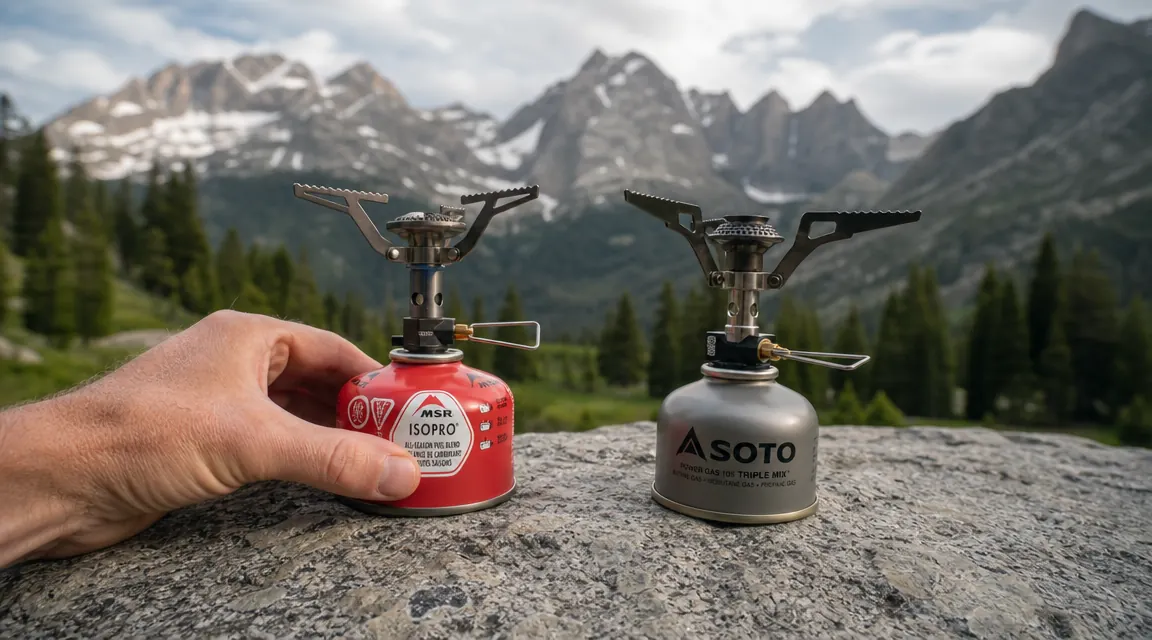
If you have spent any time in backpacking forums lately, you have seen this argument play out a hundred times. The BRS-3000T weighs 25 grams and costs very little. The MSR PocketRocket 2 weighs 73 grams and runs considerably more. Someone always shows up to say the BRS is all you need and anyone spending more is fooling themselves. I wanted to find out for myself, so I ran both stoves on the same trips over three seasons, used them in the same conditions, and made a lot of oatmeal and coffee in the process.
The short answer: the BRS-3000T is a legitimate ultralight stove for calm, fair-weather conditions. But the MSR PocketRocket 2 is the stove you can actually rely on when the weather turns, when you are tired and hungry, and when you cannot afford to fiddle with a finicky flame valve at 10,000 feet. If you are a weekend backpacker who hits the trail in summer and sticks to sheltered campsites, keep reading. The gap between these two stoves is more nuanced than the price gap suggests.
| MSR PocketRocket 2 | BRS-3000T | |
|---|---|---|
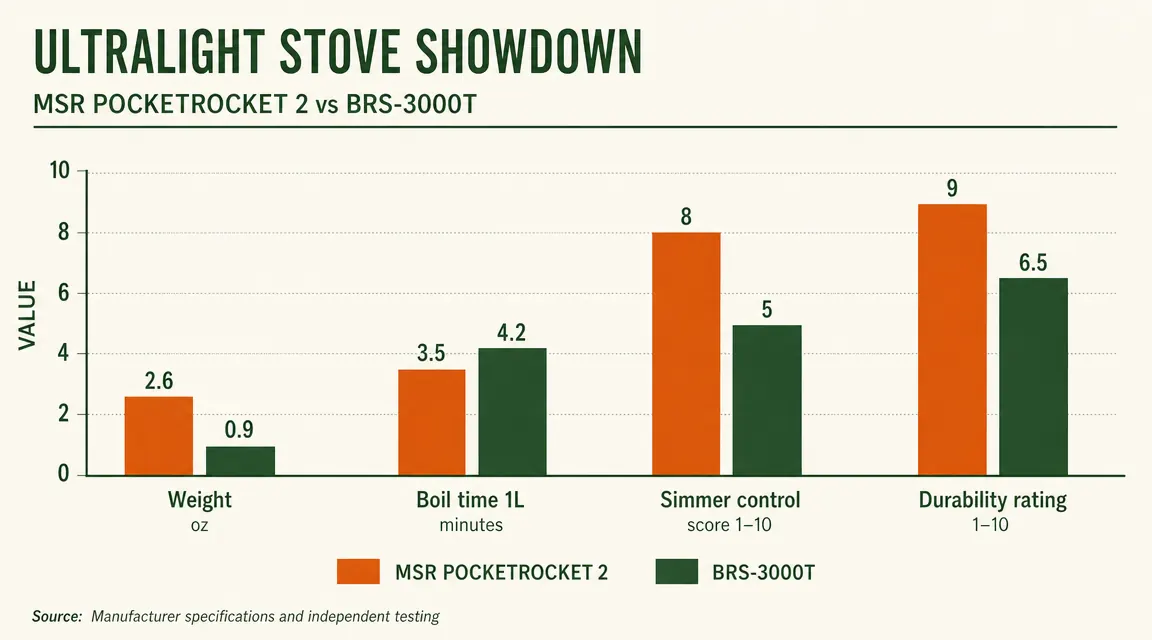
| Weight (stove only) | 73 g (2.6 oz) | 25 g (0.9 oz) |
| Boil Time (1L, calm) | 3.5 min | 4.5 min |
| BTU Output | 8,200 BTU/hr | 7,600 BTU/hr |
| Flame Valve Control | Precise, consistent simmer | Touchy, hard to modulate |
| Wind Performance | Good (serrated burner head) | Poor (open flame loses heat fast) |
| Cold-Weather Reliability | Solid down to near freezing | Struggles below 40 F |
| Build Material | Stainless steel and aluminum | Titanium |
| Pot Support Width | Wider, stable for larger pots | Narrow, best with small cups only |
| Current Price (approx.) | Budget-friendly | Check today's price on Amazon |
If you want a stove that works every time, not just when the weather cooperates
The MSR PocketRocket 2 has a 4.8-star rating from over 4,000 backpackers. It is the stove I reach for on every trip where conditions are uncertain.
Amazon Check Today's Price on Amazon →Where the MSR PocketRocket 2 Wins
The PocketRocket 2 wins on the things that matter most when you are actually out there. First is wind performance. The serrated burner head on the MSR creates a more turbulent, anchored flame that does not blow out or flatten sideways the moment a breeze comes through camp. I camped on an exposed ridgeline in the White Mountains last October, and the PocketRocket 2 boiled water reliably at full output. The BRS, on the same trip, needed to be cupped in my hands and sheltered against my pack just to get going.
Second is flame control. This sounds minor until you are trying to rehydrate a meal without scorching it, or simmer a sauce on a cold morning when your appetite has finally returned after a long first day. The BRS-3000T has a valve, technically, but it is so sensitive that you either get roaring and wasteful or nearly off. The MSR has a smooth, predictable adjustment range that lets you actually simmer. For ultralight freeze-dried meals that is not critical. For cooking anything real, it matters a lot.
Third is cold-weather reliability. Isobutane-propane blends lose pressure as temperatures drop, and both stoves feel that. But the PocketRocket 2 handles it better because its valve and burner assembly are more robust. Below 40 degrees Fahrenheit the BRS gets inconsistent, sometimes refusing to light, sometimes producing a weak flickering flame that barely heats water. The MSR keeps working in conditions that make the BRS feel like a liability.
Where the BRS-3000T Wins
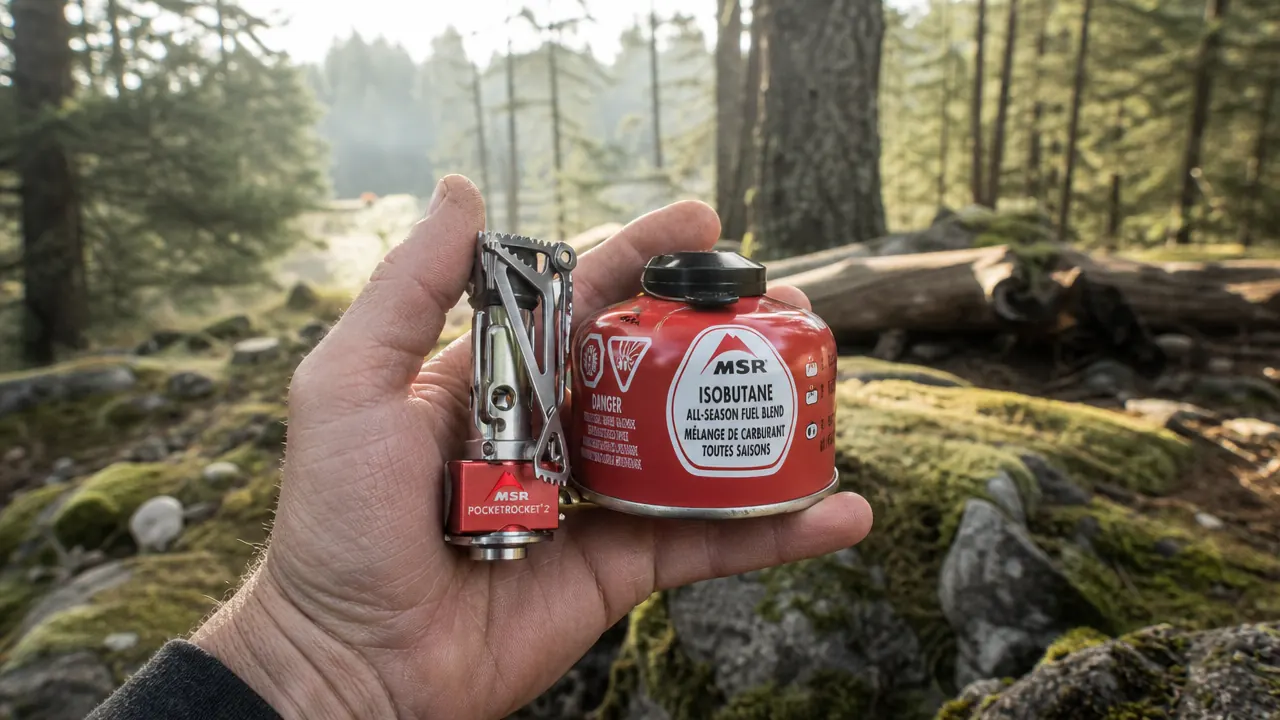
The BRS earns its cult following on two specific dimensions: weight and price. The 25-gram stove is genuinely impressive from an engineering standpoint. It folds up into a package smaller than a matchbox, weighs almost nothing in your pack, and screws onto any standard Lindal valve canister. If you are chasing a sub-ten-pound base weight and every gram is a decision, the 48-gram difference between the BRS and MSR is real and noticeable.
The price is also genuinely hard to argue with for a certain type of camper. If you are someone who goes out twice a year on short summer trips to lower-elevation, sheltered campsites, the BRS will work fine for you. Pack a windscreen, stick to calm evenings, use a small pot or titanium mug, and you will probably never hit its limits. For that use case, spending four times as much on the MSR is harder to justify.
The BRS is a fine stove for ideal conditions. The PocketRocket 2 is a fine stove for all conditions. That difference quietly compounds over every trip you take.
The Real-World Durability Gap
Here is the thing nobody talks about in the spec comparisons: durability over time. The BRS-3000T is made from titanium, which sounds premium, but the folding arms and pivot points are thin and the tolerances are tight. Over two seasons of real use, the burner arms on my BRS started to show fatigue at the fold points, and one arm bent slightly after a pot slipped during boiling. The flame also became harder to regulate as the valve wore in. These are not catastrophic failures, but on a long trip they add up.
The PocketRocket 2 uses stainless steel arms and a beefier overall construction. I have been running mine for three seasons with no degradation in performance. The serrated burner head is still clean, the valve still feels exactly as it did out of the box, and the pot supports have not bent even when I have used them with a heavier 900ml pot. MSR has been making canister stoves since before most of the BRS fans were born. That engineering history shows up in the small details.
Pot Compatibility and Stability
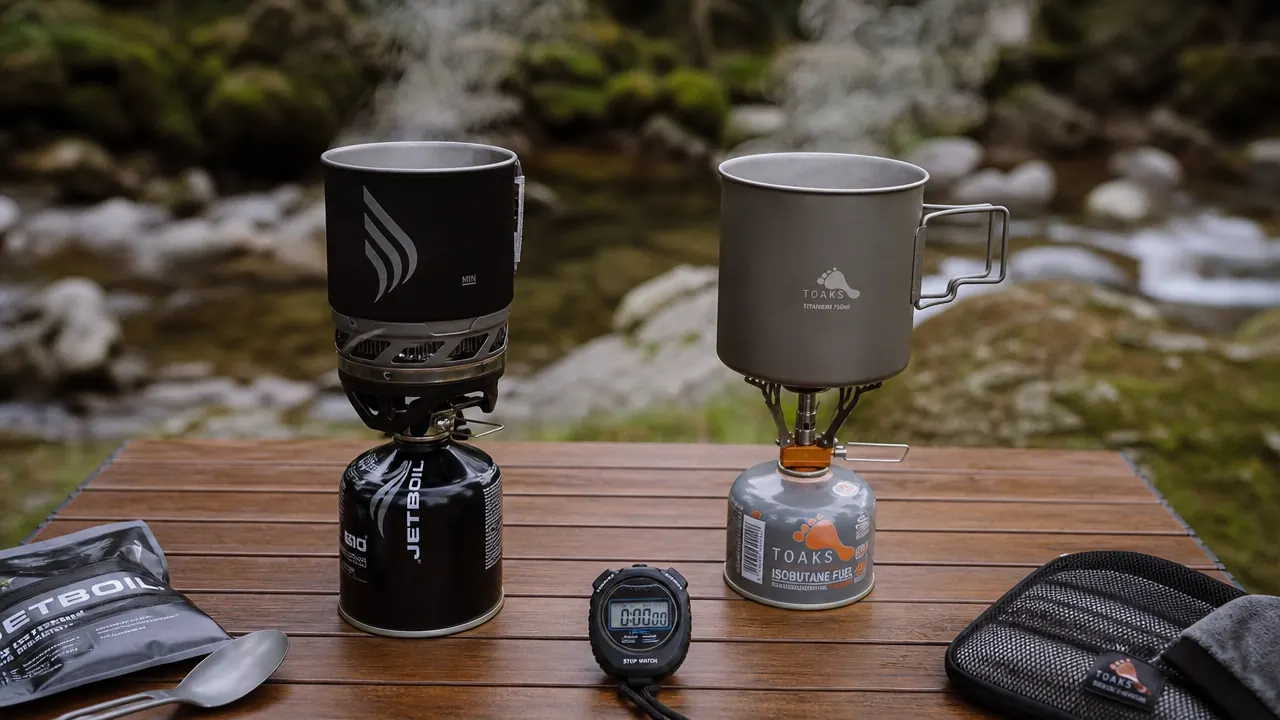
The BRS-3000T's narrow pot supports are designed for ultralight cups and small pots. A 0.5 or 0.7 liter titanium mug sits on it fine. Once you move to a 0.9 or 1.1 liter pot, the stove feels tippy, especially on uneven ground. I have seen people lose entire meals because the BRS tipped mid-boil. For solo campers using a single-serve pot this is a minor concern. For anyone cooking for two, or using a standard camping pot, the MSR's wider, more stable pot supports are a real functional advantage.
The MSR PocketRocket 2 also pairs cleanly with MSR's own pot system, and the arms spread wide enough to hold most standard-sized camp cookware without drama. If you are car camping light or doing weekend trips where you want flexibility in what you cook, the PocketRocket 2 accommodates a broader range of pots than the BRS without feeling like a balancing act.
Who Should Buy Which
Buy the MSR PocketRocket 2 if you go out more than a few times a year, camp in shoulder seasons or at elevation, cook anything beyond boiling water, or simply want a stove that works without thinking about it. It is the right tool for most backpackers, most of the time. The 4.8-star average from over 4,000 reviewers on Amazon is not an accident. You can read the full long-term review at our MSR PocketRocket 2 long-term review for a deeper look at three seasons of daily use.
Consider the BRS-3000T if you are a committed gram-counter with a sub-ten-pound base weight obsession, you only camp in summer under fair conditions, and you are comfortable managing its limitations. It also makes a decent backup stove to throw in a kit bag without worrying about cost. But if this is your only stove and your trips matter to you, the BRS is a gamble on conditions cooperating. If you want to understand why canister stoves in general beat the alternatives, the 10 reasons canister stoves are best for backpacking article covers the full picture.
The stove that has never let me down across three seasons and counting
The MSR PocketRocket 2 is 73 grams, fits in the palm of your hand, and boils a liter of water in 3.5 minutes. It is the canister stove that serious backpackers keep coming back to, and for good reason.
Amazon Check Today's Price on Amazon →