
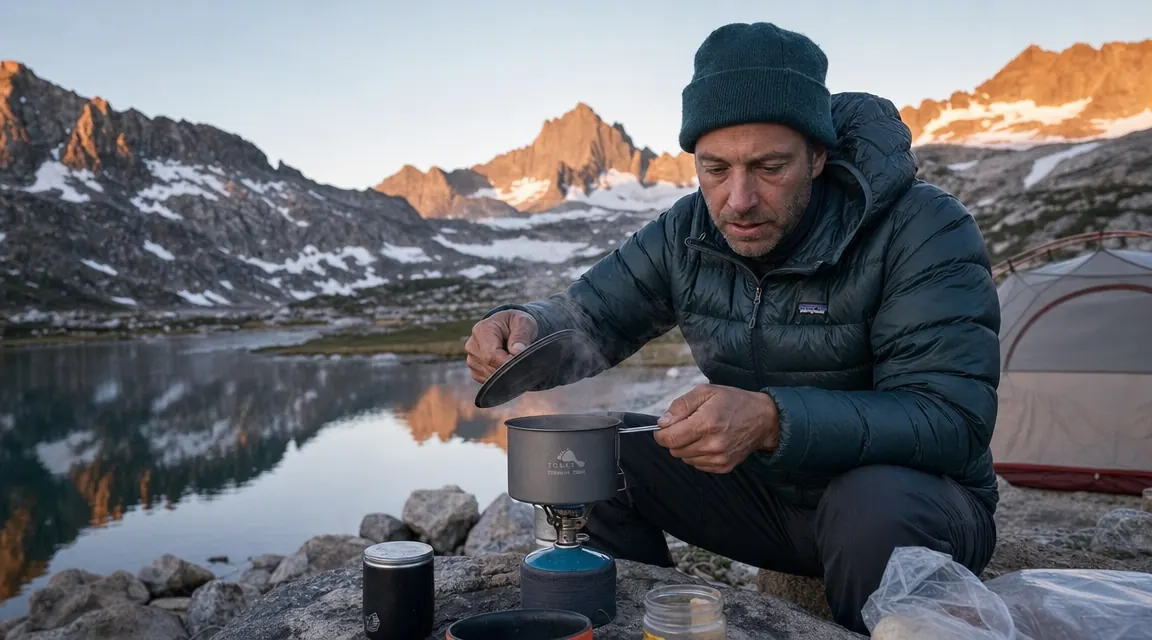
I have cooked on a camp stove in sleet, at 11,000 feet, after a nine-hour day on trail. I have also fussed with alcohol tabs that refuse to ignite in the cold, and white-gas stoves that need a ten-minute priming ritual before they will produce flame. After all of that, I keep coming back to the same answer: a canister stove is the right tool for the vast majority of backpackers. The MSR PocketRocket 2 is the one I reach for every trip, and the reasons are straightforward enough that I can list them without editorializing.
If you are still hauling a heavy camp stove, relying on a fire ring, or staring at an alcohol stove that takes 18 minutes to bring water to a simmer, this list is for you.
Your trail coffee should not take 20 minutes. The MSR PocketRocket 2 boils a liter in under four.
Weighing just 2.6 oz and folding to the size of an espresso shot, the PocketRocket 2 is the canister stove most backpackers eventually settle on. Rated 4.8 stars across 4,000+ verified purchases.
Amazon Check Today's Price on Amazon →Ignition in under three seconds, every time
Twist the valve, flick the lighter, cook. There is no priming, no preheating, no pumping. On a cold morning at elevation when your fingers are stiff and your patience is short, this matters more than any spec on the box. The MSR PocketRocket 2 lights on the first try reliably because the isobutane-propane blend stays pressurized even in cold air. White-gas stoves require a five-step startup that I have watched beginners fumble in the rain for ten minutes.
The whole system fits in your fist
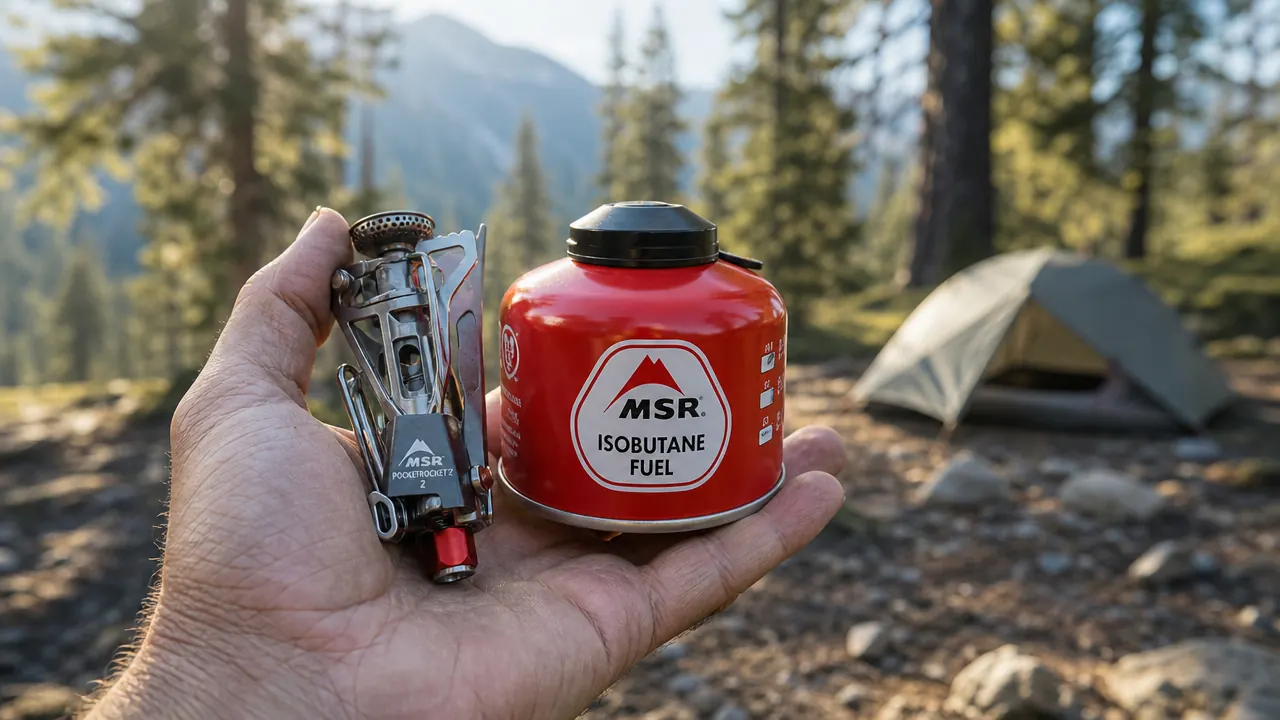
The stove folds down to roughly the size of a stack of quarters and weighs 2.6 oz. Combined with a standard 110g isobutane canister and a 0.9L titanium pot, your entire cooking kit fits inside the pot and weighs under a pound. Compare that to a white-gas setup, which routinely runs 1.5 to 2 lbs before you add fuel. Every ounce you cut from your pack is an ounce your knees thank you for on mile 14.
Precise flame control for actual cooking
The PocketRocket 2 has a serrated valve that gives you genuine low-to-high control. You can simmer a curry or blast through a boil depending on what you need. Alcohol stoves offer one setting, which is somewhere between medium and medium-high, and you are working around it the whole time. If you ever want to cook something that is not instant noodles, flame control is non-negotiable.
Wind performance that does not require a windscreen novel
Most canister stoves struggle in wind, which is a fair criticism. The PocketRocket 2 has a folding pot support with a built-in wind profile and a recessed burner head that cuts wind disruption significantly compared to older canister designs. It is not invincible in a gale, but a bandana draped on the windward side handles 80 percent of conditions. I have cooked in 25 mph sustained wind on a Wyoming ridge without losing flame.
Fuel canisters are available almost everywhere
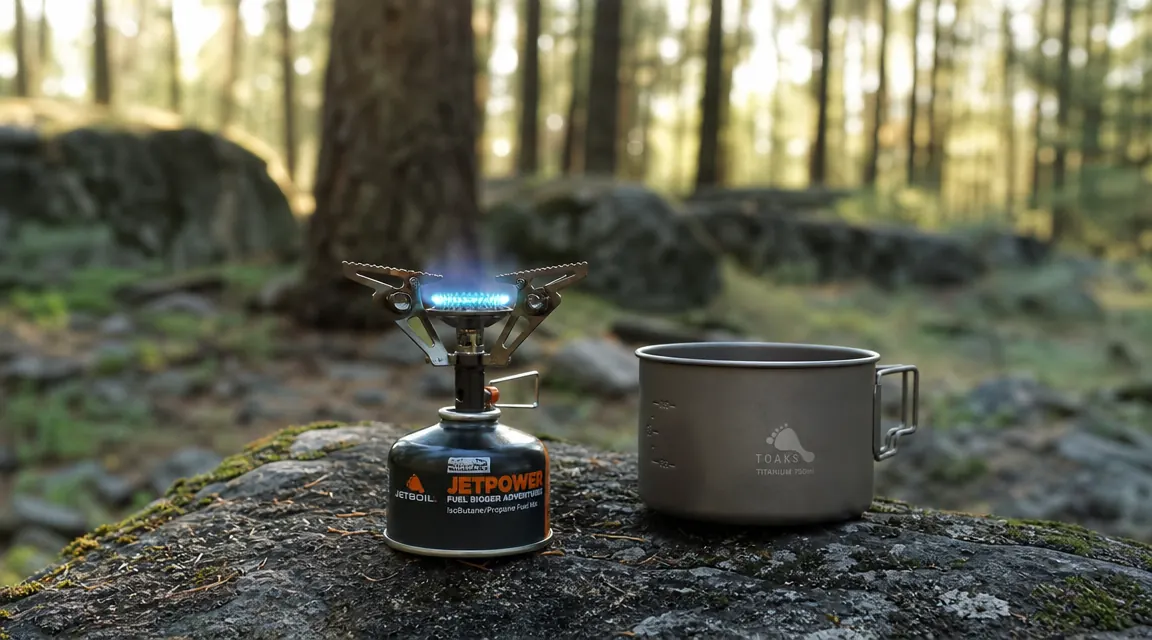
Any REI, Cabela's, Bass Pro, or independent outdoor shop carries isobutane-propane canisters in 110g and 230g sizes. If you are flying to a trailhead, you cannot take canister fuel on a plane, but you can buy a new canister within a mile of most major trailheads. Denatured alcohol, the fuel for alcohol stoves, is harder to find in smaller towns. Isobutane is nearly universal in the US and Canada.
The PocketRocket 2 has been on every trip I have taken in three years. I have never once wished I brought something heavier.
Cleanup takes about 30 seconds
Canister stoves produce a clean, carbon-free flame. Your pot stays cleaner than it does over any wood fire or white-gas stove, and you are not scrubbing soot out of a stuff sack. After dinner, I rinse the pot, wipe the stove with a corner of a camp rag, and I am done. That time-savings adds up over a multi-day trip when your after-dinner energy is already depleted.
Fuel consumption is predictable and measurable
A 110g canister gets me roughly 10 to 12 boils of one liter each at moderate temperatures. I know going in how much fuel I need to carry for a three-day trip versus a seven-day trip, and I can weigh the canister at home to verify what I have left. Alcohol stoves require you to estimate by volume in a small bottle, and wood fires depend entirely on conditions you cannot control. Predictability is a safety feature.
The stove itself lasts for years with minimal maintenance
The MSR PocketRocket 2 has no o-rings to replace, no jets to clean, and no moving parts beyond the valve. I have had mine for three years and it performs identically to how it did out of the box. White-gas stoves need annual maintenance kits, jet cleaning, and occasional pump cup replacement. If you want gear that works every trip without a maintenance ritual, canister wins.
Canister stoves are beginner-friendly without sacrificing performance
I host campsite nights for a local hiking club and I have watched people of all experience levels pick up a canister stove and use it correctly on the first try. That is not true of liquid-fuel stoves. But beginner-friendly does not mean toy gear. The PocketRocket 2 is rated for 1 liter in 3.5 minutes at sea level, a boil time that matches or beats stoves three times its price. You are not giving up capability to get simplicity.
The price-to-performance ratio is hard to argue with
At its current price, the MSR PocketRocket 2 costs less than a single night in a motel at most trailhead towns. For that, you get a stove that has been in continuous production and refinement since 1999, that MSR backs with a lifetime warranty on defects, and that thousands of thru-hikers have trusted on every major trail in North America. You can buy cheaper canister stoves, and some of them are fine. But the PocketRocket 2 is the version where the engineering is genuinely dialed.
What I'd Skip
There is one canister stove category I would steer most backpackers away from: the ultra-ultralight titanium models like the BRS-3000T. They weigh less than an ounce and the price is almost comically low. The tradeoff is a burner head that lacks any wind protection, a valve that is difficult to modulate precisely, and pot supports that require balance rather than grip. For weekend trips in mild conditions with an experienced cook, they are fine. For anyone else, the marginal weight savings is not worth the frustration. If you want the full breakdown, I compared the two directly in my MSR PocketRocket 2 vs BRS-3000T comparison.
I also tend to skip integrated canister systems for solo backpacking. All-in-one stove-pot combos like the Jetboil are efficient for boiling water and nearly useless for anything else. If your entire trip is freeze-dried meals and instant coffee, they work. The moment you want to saute something or cook at a low simmer, you are fighting the tool. For versatility, a standard canister stove plus a wide-mouth pot gives you a complete system.
If your current camp cooking setup takes longer to start than it takes to boil water, it is time to upgrade.
The MSR PocketRocket 2 has a 4.8-star rating from over 4,000 backpackers. It weighs 2.6 oz, folds to pocket size, and lights first try. I have used mine on every trip for three years straight. For a full breakdown of long-term performance, read my MSR PocketRocket 2 review.
Amazon Check Today's Price on Amazon →