
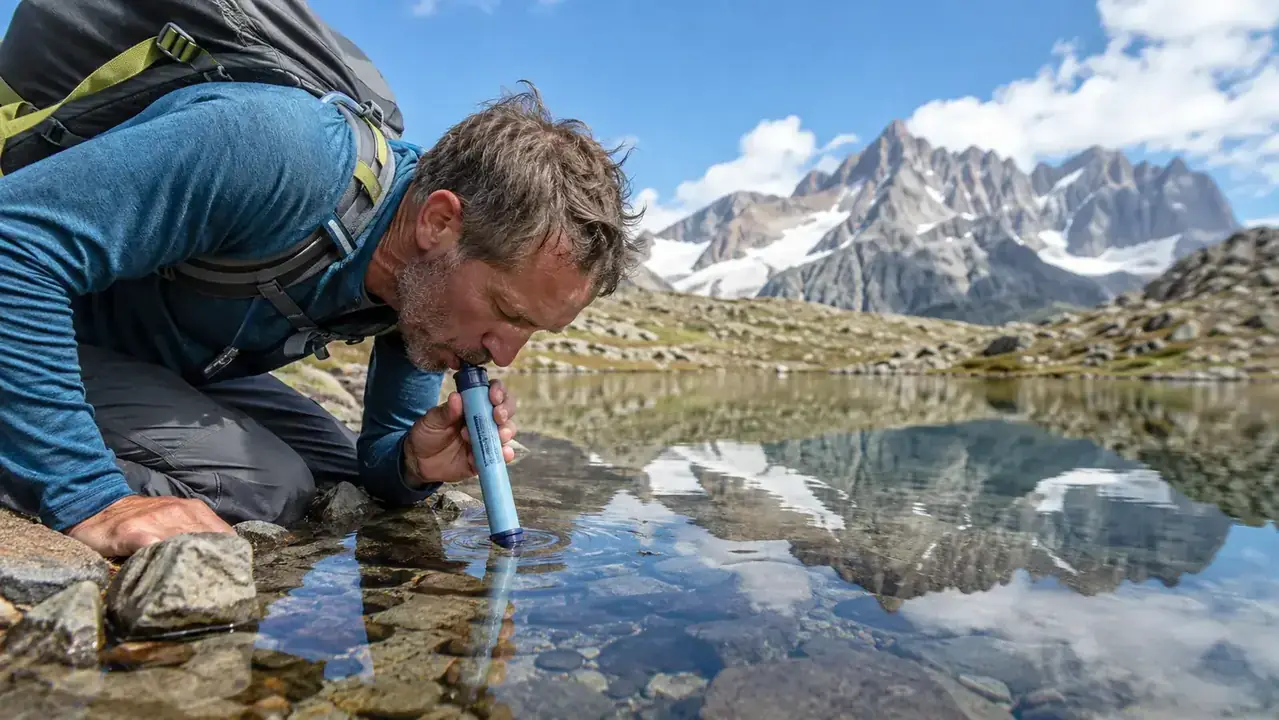
It was a Saturday in late September, a 14-mile loop in the Allegheny National Forest I'd done twice before, so I packed light. Maybe too light. My soft flask had a pinhole leak I didn't find until mile four, and by the time I hit the halfway point I had maybe three ounces of water left and a sweaty 7-mile return in front of me. The temperature had climbed into the mid-70s. Not dangerous in October, but uncomfortable in a way that gets your attention fast.
I sat on a log and took stock. There was a small feeder creek about 200 yards off trail that I'd crossed on the way in, clearly running. I knew the water looked clean, but I also knew looks mean nothing when it comes to giardia and cryptosporidium. I'd been warned about those enough times to take it seriously. I'd also been warned about them enough times to get lazy about it, which is how I'd ended up with exactly one backup water option in my hip belt pocket: a LifeStraw Personal Water Filter I'd tossed in almost as an afterthought before I left the truck.
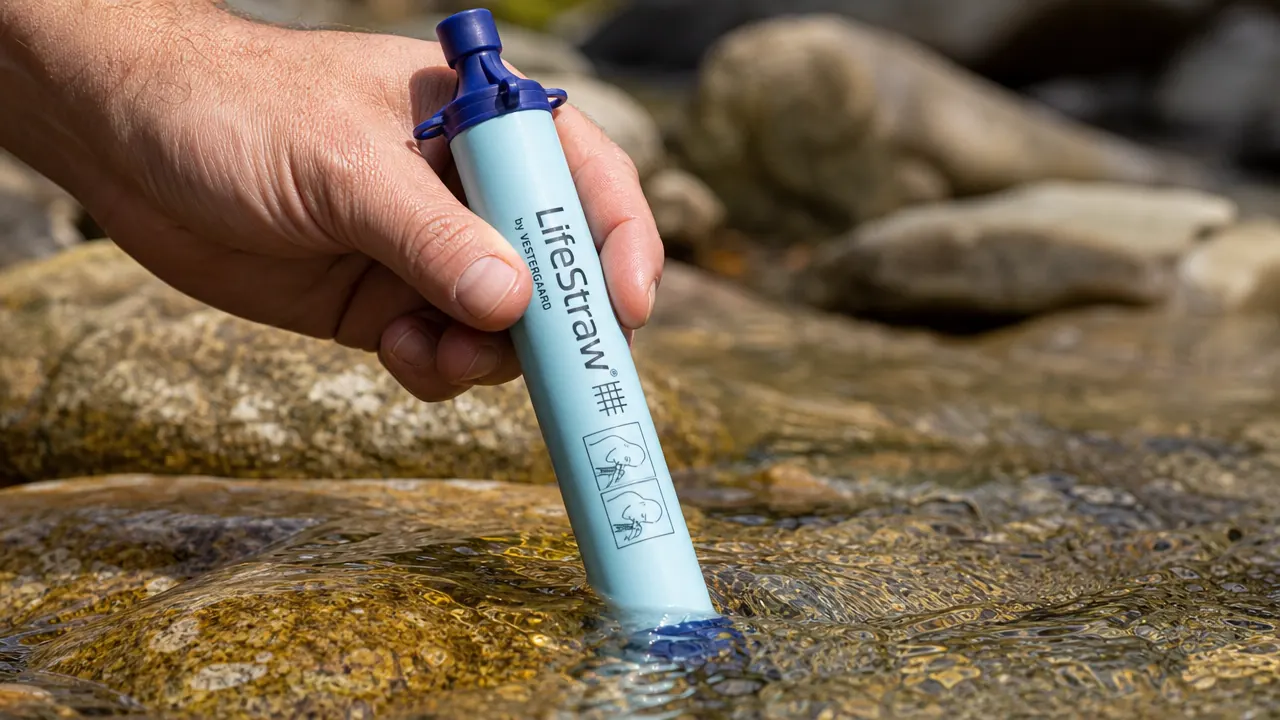
I'll be honest with you. I'd owned that LifeStraw for two years and never actually used it in the field. I'd tested it once in my kitchen sink, confirmed water came through, and then filed it under 'emergency gear' and forgot about it. That afternoon in the Alleghenies was its first real deployment. I hiked to the creek, uncapped the mouthpiece, dropped the lower end into a clear pool, and drank. It took a little suction to get started, like a thick milkshake straw. Then the water came through clean and cold and I drank until I wasn't worried anymore.
I refilled twice more on the way back to the trailhead. The LifeStraw filtered every sip through its hollow-fiber membrane, pulling out bacteria and protozoa down to 0.2 microns. Not viruses, which matters in some international destinations but is less of a concern in the continental US backcountry. For a domestic day hike or overnight trip where giardia is the real risk, it does exactly what you need it to do. I got back to the truck fine. The filter weighed 2 ounces. It cost me less than typical bottled water at current pricing.
It weighed 2 ounces and fit in my hip belt pocket. That afternoon it was the most useful thing I had in my entire pack.
Don't wait until you're 7 miles out to find out if your water backup works.
The LifeStraw Personal Water Filter filters up to 1,000 gallons (4,000 liters) of contaminated water, weighs 2 ounces, and has no moving parts or batteries. It's the simplest insurance policy in backpacking.
Amazon Check Today's Price on Amazon →
Since that trip I've carried the LifeStraw on every single outing, long or short. Not because I'm worried about emergency situations every time, but because I've learned that worrying about water is a waste of mental energy when you don't have to. The filter slips into a hip belt pocket or the side mesh on any pack. It adds nothing meaningful to my load. And when I find a good flowing creek and want a cold drink without unpacking my entire water treatment kit, it's the fastest option there is.
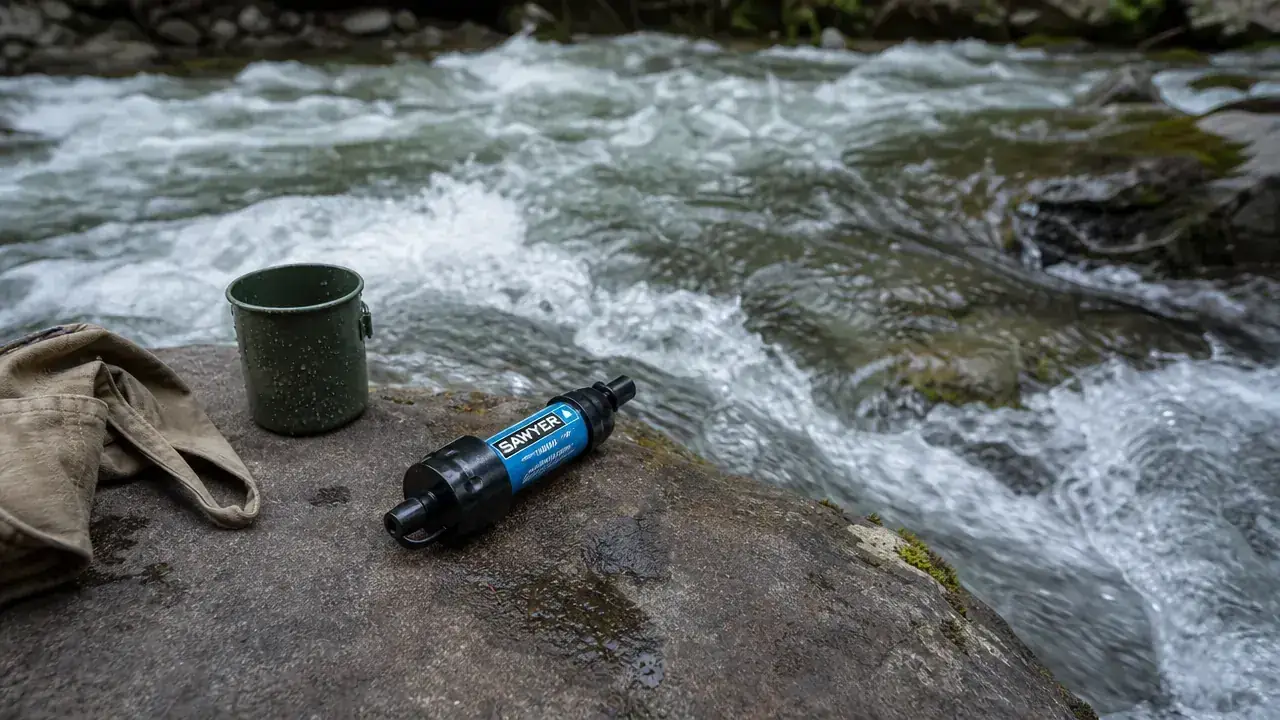
The main limitation is the form factor. You drink directly from the water source through the straw, which means you can't collect water in a bottle and treat it for later. If you're planning a stretch between water sources, you need to tank up at the source and you can't carry treated water forward with you. That's the honest tradeoff. For those situations, I pair it with a backup soft flask or a dedicated squeeze filter like the Sawyer. The LifeStraw isn't trying to replace a full water treatment system. It's a lightweight safety net, and as a safety net it's nearly perfect.
A few practical things worth knowing: the cap that protects the mouthpiece is small and easy to lose. I put a short piece of paracord through the hole in the top cap so it stays tethered to the body. The filter doesn't expire as long as you backflush it and let it air dry fully before storage. Storing it wet can grow mold inside the membrane, which defeats the whole point. Blow through the mouthpiece before putting it away and let it dry overnight. That's the entire maintenance routine.
For 4 years I've now taken this same filter into the field across probably 60 or 70 day hikes and a dozen overnights. The flow rate is still good. No cracking, no issues with the membrane. Given what it costs and how long it lasts, I genuinely can't think of a better value in my entire kit. My tent and my sleeping bag and my stove all cost more and require more maintenance. This one just works, every time.
What I'd Tell You If We Were Sitting at My Kitchen Table
Here's the short version: buy one, throw it in your pack, and forget about it. You don't need to make a project out of this. The LifeStraw costs less than a post-hike meal. It filters up to 1,000 gallons before it's spent, which means for most weekend backpackers it will last years. When the day comes that you're dehydrated and staring at a creek you'd drink from if you only had something to filter it, you'll be glad you spent the sixteen bucks.
If you want a deeper look at how it performs across different water sources, flow rate over time, and how it compares head-to-head to the Sawyer Squeeze, I wrote up a full long-term LifeStraw review after four years of use. And if you're building a full backcountry water strategy from scratch, the guide on how to find and filter safe water in the backcountry walks through source selection, treatment method tradeoffs, and when chemical treatment beats physical filtration. But honestly, if you're just looking for a trustworthy emergency backup that weighs nothing and costs almost nothing, stop reading and go buy the LifeStraw. Some decisions don't need a lot of analysis.
Two ounces. Budget-friendly. Filters up to 1,000 gallons.
The LifeStraw Personal Water Filter is the most-reviewed water filter on Amazon for a reason. No pumping, no batteries, no expiration date. Works right out of the package. Add it to your kit today.
Amazon Check Today's Price on Amazon →