
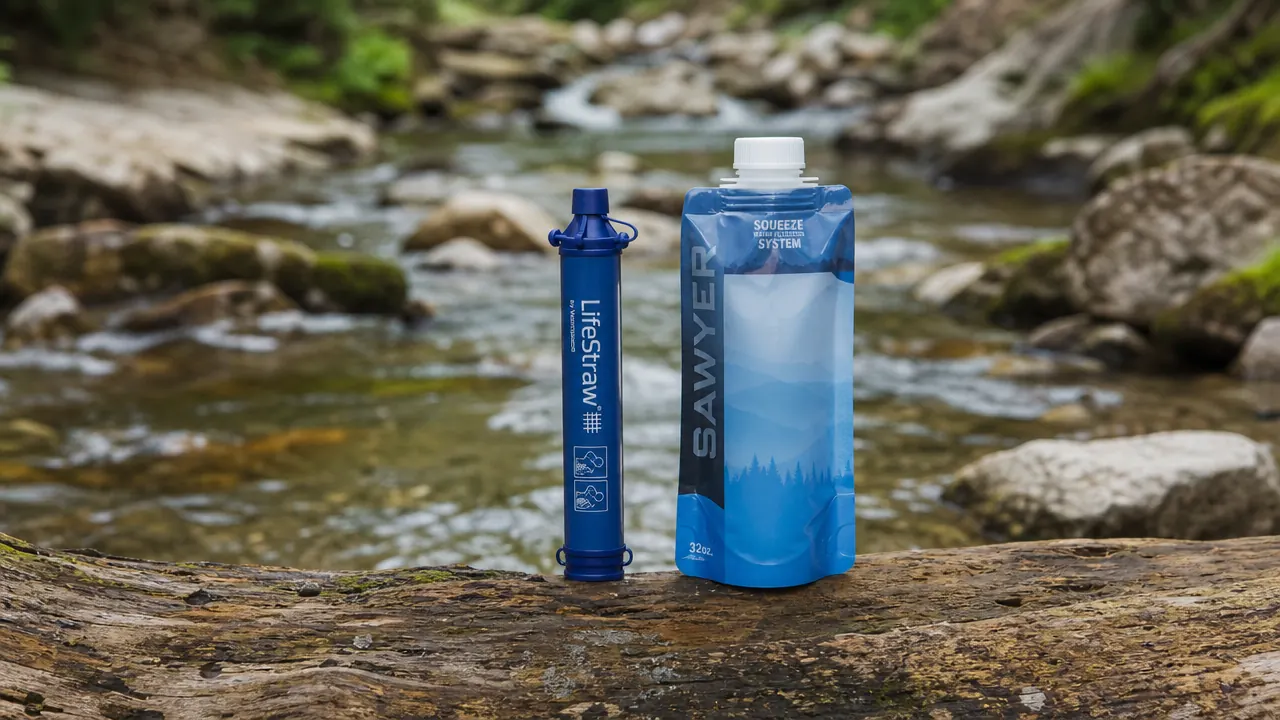
If you have spent more than ten minutes researching backpacking water filters, you have run into these two names. The LifeStraw and the Sawyer Squeeze have dominated the budget end of the backcountry water market for years, and for good reason. Both work. Both are light. Both cost less than a tank of gas. But they are built around completely different philosophies, and choosing the wrong one for your style of hiking will annoy you every single day on trail. I have carried both, in the Cascades, the Sierras, and on car camping trips with my kids, and here is the honest rundown.
Short answer: for day hikes, casual backpacking, and emergency preparedness kits, the LifeStraw is the better buy. It is cheaper, simpler, lighter, and requires zero setup or maintenance in the field. The Sawyer Squeeze earns its reputation on longer trips and in group situations where filling bottles with a squeeze pouch makes sense. But for the vast majority of campers reading this, the LifeStraw is the right call.
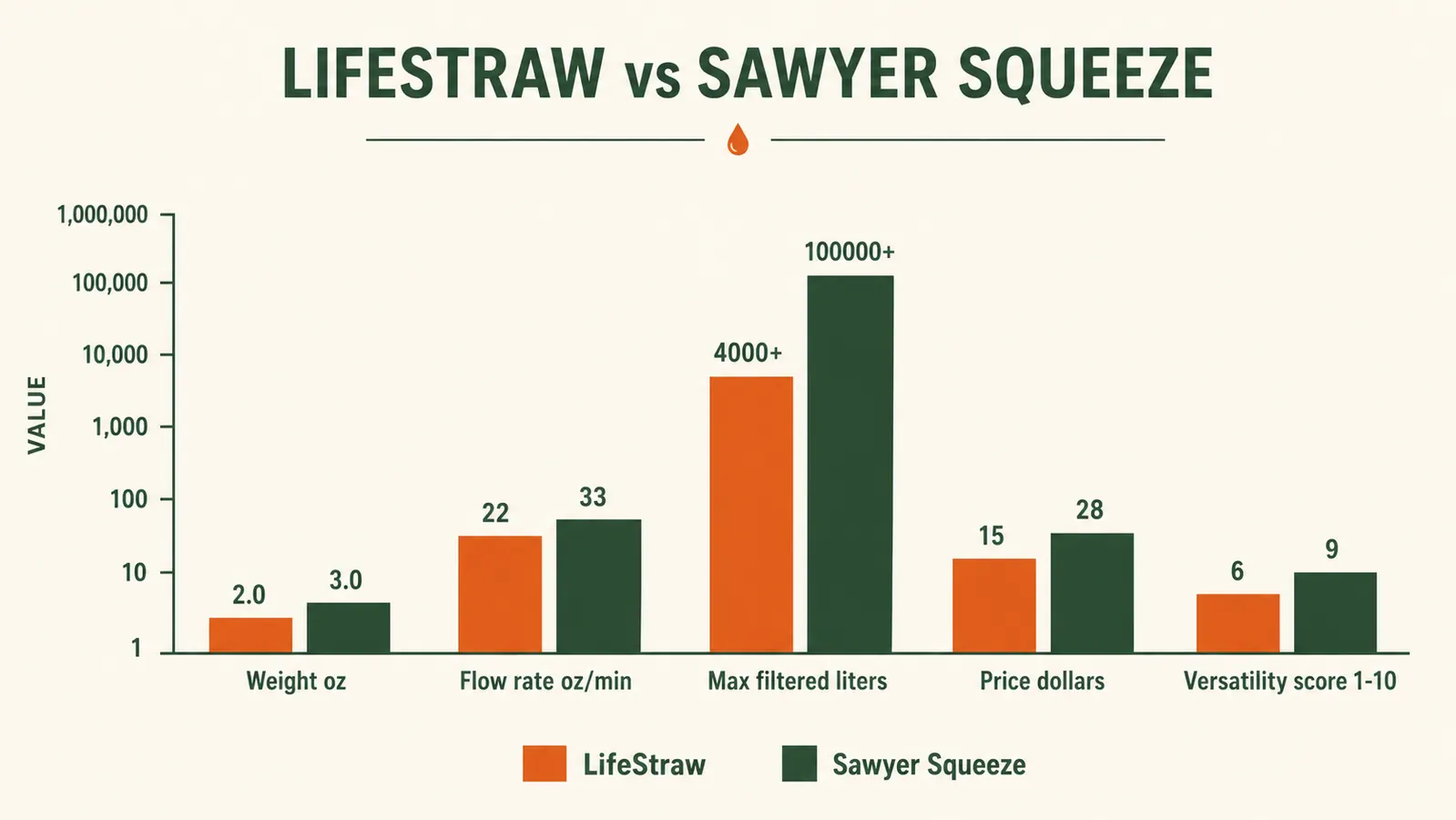
| LifeStraw | Sawyer Squeeze | |
|---|---|---|
| Price (current) | Check today's price on Amazon | Mid-range pricing |
| Weight | 2 oz (57 g) | 3 oz (85 g) with pouch |
| Filter Life | 1,000 gallons (3,785 L) | 100,000 gallons (378,500 L) |
| Filtration Rating | 0.2 micron hollow fiber | 0.1 micron hollow fiber |
| Removes Bacteria/Protozoa | Yes (99.999999%) | Yes (99.99999%) |
| Removes Viruses | No | No |
| Use Method | Drink directly (straw-style) | Squeeze pouch or inline |
| Backwashing Required | None needed | Yes, to maintain flow rate |
| Versatility (bottle adapter, gravity) | Limited (straw-use focused) | High (multiple configurations) |
Where the LifeStraw Wins
The LifeStraw's biggest advantage is that there is nothing to mess up. You uncap it, put one end in water, and drink. No squeeze pouch to fill. No backflushing procedure to remember. No adapter threading or gravity bag to hang. On a day hike or during an emergency, that simplicity is worth real money. I have handed a LifeStraw to hikers who have never used a water filter in their lives and they were drinking clean water in under thirty seconds.
Weight and price are the other two columns where LifeStraw wins clean. At around $15 and 2 oz, it is genuinely one of the best value-per-ounce pieces of safety gear you can carry. I keep one in every car, every overnight bag, and every go-bag in my house. At that price, there is no reason not to. The Sawyer Squeeze is a better long-term investment in raw filter-life terms, but you are paying double the entry cost and adding weight you might not need for a single weekend trip.
Maintenance is another place LifeStraw just stays out of your way. The Sawyer Squeeze needs regular backflushing with the included syringe to keep its flow rate up, and if you forget to do it after a long trip in silty water, you can end up with a filter that flows like concrete. The LifeStraw does not require backflushing at all during its service life. You blow back through it lightly to clear it, but there is no syringe, no protocol, no chance of storing it wrong and finding it seized up at the trailhead.
Want a water filter you can hand to anyone and it just works?
The LifeStraw has 4.8 stars from over 124,000 Amazon reviews. At current price, it is the easiest gear decision you will make before your next trip.
Amazon Check Today's Price on Amazon →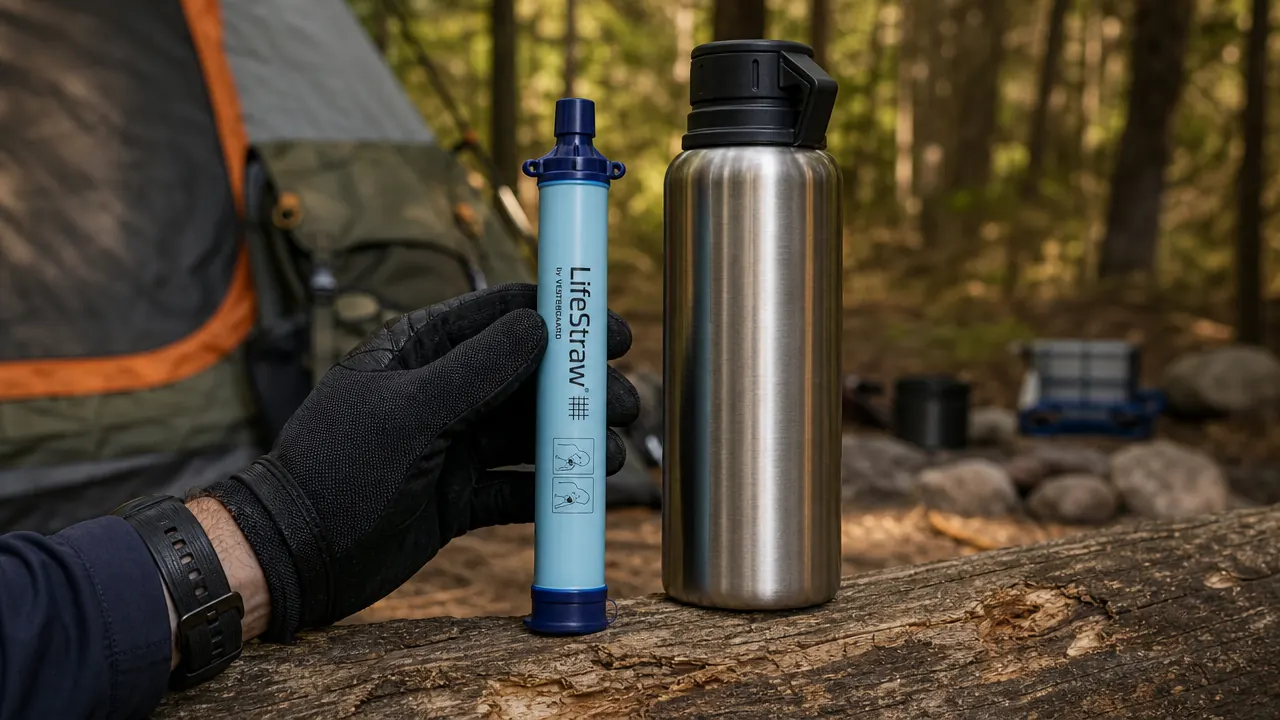
Where the Sawyer Squeeze Wins
The Sawyer Squeeze has a legitimate edge in two areas: filter lifespan and versatility. The rated filter life is 100,000 gallons, which is effectively a lifetime filter for most recreational hikers. If you are doing weeks-long thru-hikes every year and want to buy one filter and keep it for a decade, the Sawyer math eventually works in its favor. The 0.1 micron rating is also slightly tighter than LifeStraw's 0.2 micron, which matters in certain glacial silt conditions where you want maximum particulate blocking.
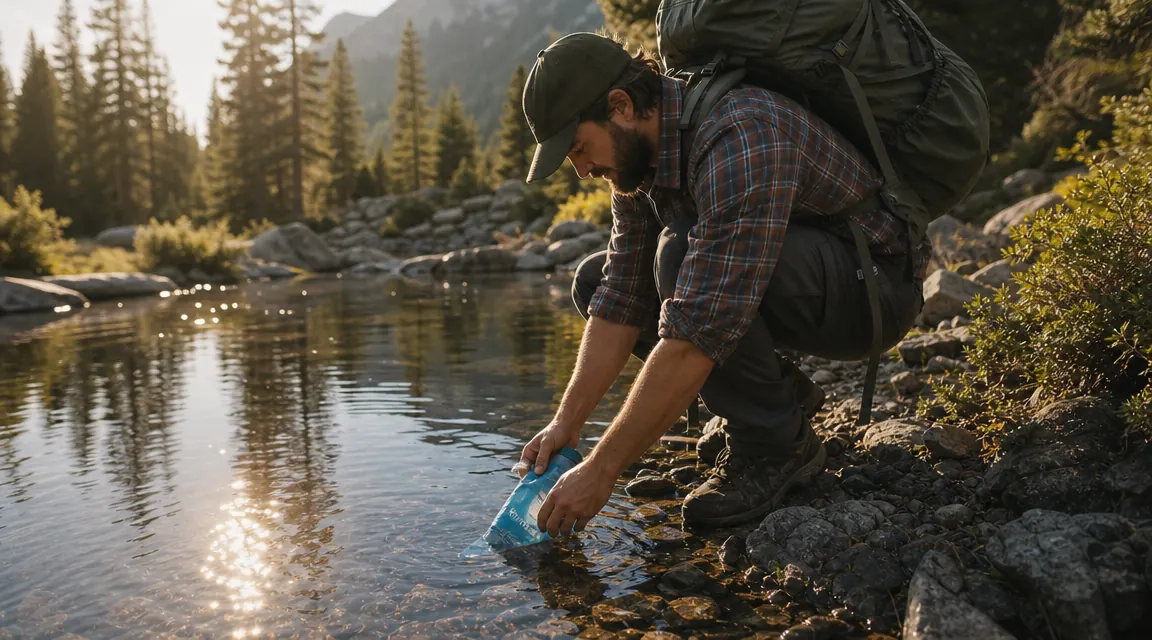
The versatility argument is real for group hikers and for people who want to run an inline filter on a hydration reservoir. The Sawyer Squeeze can attach directly to a standard smart water bottle, thread inline on a hydration pack tube, or be rigged into a gravity filter system for camp water. If you are regularly filtering for two or three people and need to fill a 2-liter pot, the squeeze pouch method beats the LifeStraw's straw-style drinking hands down. You are filling a container, not putting your face in a creek. For solo day hikers, that versatility is overkill. For a group car camp, it matters.
Who Should Buy Which
Buy the LifeStraw if you are a day hiker, a casual weekend backpacker, a parent building an emergency kit, or anyone who wants a dead-simple filter that costs less than a lunch out. It handles every North American backcountry water source you are likely to encounter. It is also the right call for anyone buying their first water filter who does not want to learn a system, carry extra gear, or think about maintenance. At under $16, you can keep one in your car, one in your pack, and one in a drawer and still spend less than one Sawyer Squeeze.
Buy the Sawyer Squeeze if you are a serious thru-hiker, a group leader who regularly filters large volumes of water, or someone who wants to build a gravity filter system for basecamp use. It is also the better choice if you are planning international travel where you need to filter into a bottle rather than drink from a source directly. The higher up-front cost is justified when you are putting real miles on it and want one filter that works in a dozen configurations.
At $15 and 2 oz, the LifeStraw is the easiest gear decision most campers will ever make. There is no complicated system to learn and nothing to break before you even get to the trailhead.
Real-World Use: A Few Notes From the Trail
One thing I want to flag that most filter comparisons gloss over: neither the LifeStraw nor the Sawyer Squeeze removes viruses. In North America, this is almost never a problem. Giardia and Cryptosporidium are the main backcountry threats, and both filters handle those easily. But if you are using either filter internationally, in areas with human waste contamination near water sources, or in any post-disaster scenario where sewage and water supplies may have mixed, you need to add chemical treatment (iodine tablets or Aquatabs) to your routine. This is not a knock on either filter. It is true of virtually every hollow-fiber filter on the market under $100.
I also want to be straight with you about flow rate. A new LifeStraw flows well and feels effortless for the first few dozen uses. Over time, as the filter loads up, it does take more effort to drink through. This is normal hollow-fiber behavior and you can clear it by blowing back through the filter. But if you are on mile 800 of the PCT and your arms are tired, some hikers find the Sawyer Squeeze's squeeze-and-fill method less fatiguing over the long haul. For weekend trips, you will not notice.
Storage matters too. Both filters need to be stored fully dry to prevent mold or cracking of the membrane in freezing temperatures. The LifeStraw is easier to dry out completely because of its simpler geometry. The Sawyer Squeeze's squeeze pouch is notorious for being difficult to fully dry and can develop mildew if stored wet. Some long-distance hikers ditch the included Sawyer pouch and use standard 28 oz Smart Water bottles instead, which solves the problem but adds a small amount of hassle.
The Filtration Specs Translated Into English
Both filters use hollow-fiber membrane technology, which means millions of tiny tubes with microscopic pores that physically block bacteria and protozoa while letting water molecules through. The LifeStraw is rated to 0.2 microns and removes 99.999999% of bacteria and 99.9999% of protozoa. The Sawyer Squeeze tightens that to 0.1 microns and claims similar removal rates. In practical terms, on any North American backcountry water source, both filters provide safe drinking water. The difference in micron rating is only relevant in edge cases involving very fine particulate or extremely turbid water.
The filter life difference is worth understanding clearly. LifeStraw's 1,000-gallon rating sounds limiting but consider that the average weekend backpacker drinks roughly 2 liters per day on trail. At that rate, 1,000 gallons equates to about 1,892 days of hiking, or about five years of weekend trips. You will almost certainly lose the filter before it wears out. The Sawyer's 100,000-gallon rating is, for recreational hikers, essentially meaningless as a differentiator. It matters for thru-hikers and international travelers. For everyone else, both filters will outlive their useful life.
Ready to stop carrying bottled water on every hike?
The LifeStraw Personal Water Filter is the simplest, lightest way to drink safe water anywhere outdoors. Check today's price on Amazon and see why it has earned over 124,000 five-star reviews.
Amazon Check Today's Price on Amazon →