
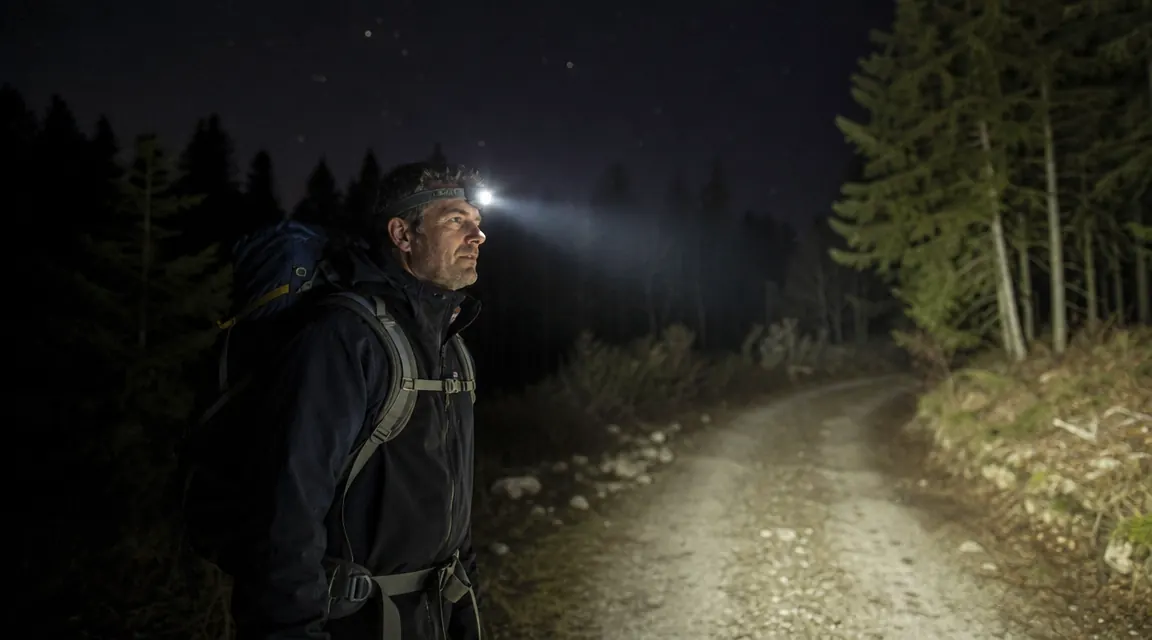
About fourteen months ago I dumped my old coin-cell headlamp into a gear bin and started carrying the Black Diamond Spot 400 on every trip. I had just arrived at a trailhead after dark for a solo weekend in the Cascades, reached into my pack for my old light, and got a dim orange glow that barely hit ten feet. That was the end of that headlamp. I picked up the Spot 400 the following week, and it has been clipped to my pack or charging on my desk ever since. A year of weekend backpacking, family car camping, and a few late-night creek crossings felt like enough time to give it a fair look.
The Black Diamond Spot 400 tops out at 400 lumens, runs on a USB-C rechargeable battery (or three AAA cells as a backup), carries an IPX8 waterproof rating, and includes a red night-vision mode. At roughly $60, it sits above the budget pile but below the professional search-and-rescue tier. That middle ground is exactly where most weekend campers and backpackers live, and I wanted to know whether the Spot 400 actually delivers on its specs after repeated real-world use.
The Quick Verdict
The best all-around headlamp for campers who want genuinely bright light, IPX8 waterproofing, and USB-C charging without paying expedition prices.
Amazon Check Today's Price →Done researching? The Spot 400 ships fast and usually arrives before your next trip.
Black Diamond backs this light with solid build quality and a USB-C rechargeable design that ends the dead-battery scramble at the trailhead.
Amazon Check Today's Price on Amazon →How I've Used the Spot 400 Over the Past Year
My test conditions were not lab controlled. I took this headlamp to Ohanapecosh in late October during a three-day rain that did not quit, to a desert dispersed site in eastern Oregon in July where temperatures hit 94F during the day, and on a dozen or so family weekends at car-camping sites where I mostly needed it for bathroom runs and cooking after dark. I weigh about 175 pounds, carry a medium-frame pack, and have no patience for gear that requires a manual to operate at 11 PM when you are tired and cold.
I charged the Spot 400 at home before each trip and almost never needed to top it off mid-trip. On a three-night backpacking trip, I used the headlamp for roughly an hour each evening and about 20 minutes each morning breaking camp. I came home with battery remaining. The USB-C port cover is firm enough that I stopped worrying about water intrusion after the first rainy outing went without issue.
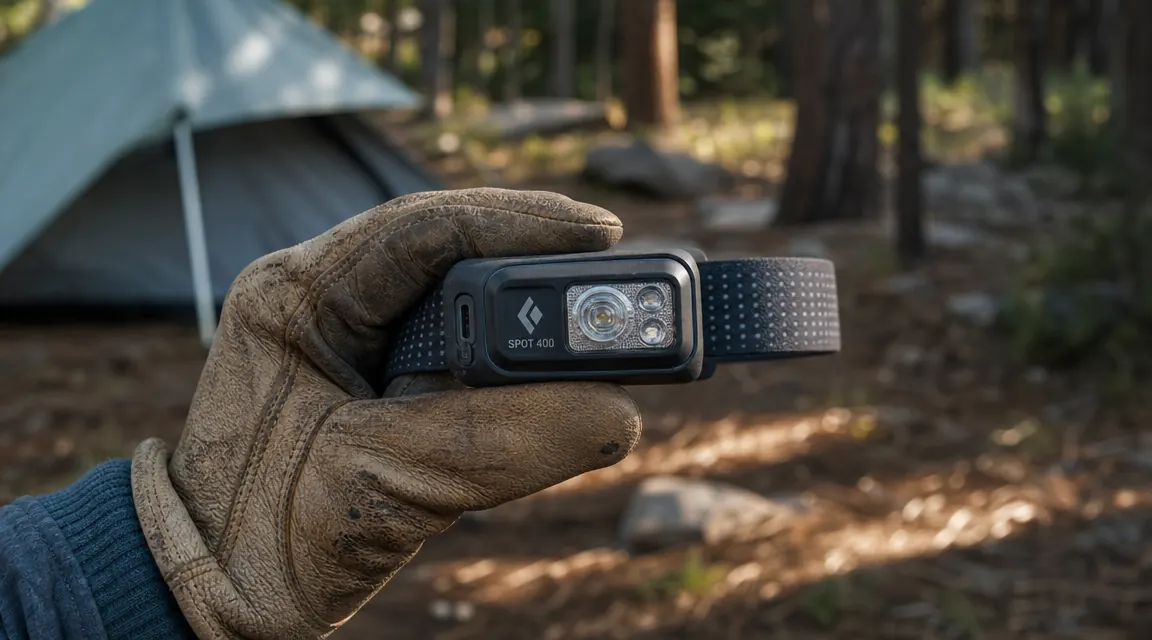
Beam Performance: What 400 Lumens Actually Gets You
The 400-lumen max is not a marketing number you hit for two minutes before the light throttles down. Black Diamond's PowerTap technology lets you instantly switch between full brightness and a dimmed mode by pressing and holding the rear button. At full power in a dark forest, I can clearly see the trail 70 to 80 feet ahead, which is more than enough to walk confidently on uneven terrain. At the mid setting (roughly 150 lumens) the battery life jumps significantly and the beam is more than adequate for campsite tasks.
The spot beam is tight enough for distance work and the flood mode gives you a wide wash for cooking, reading, or dealing with gear in a tent. The transition between the two is smooth. I never found myself wishing for a brighter light or frustrated by a beam that was too narrow or too wide for what I was doing. That balance is harder to get right than it sounds.
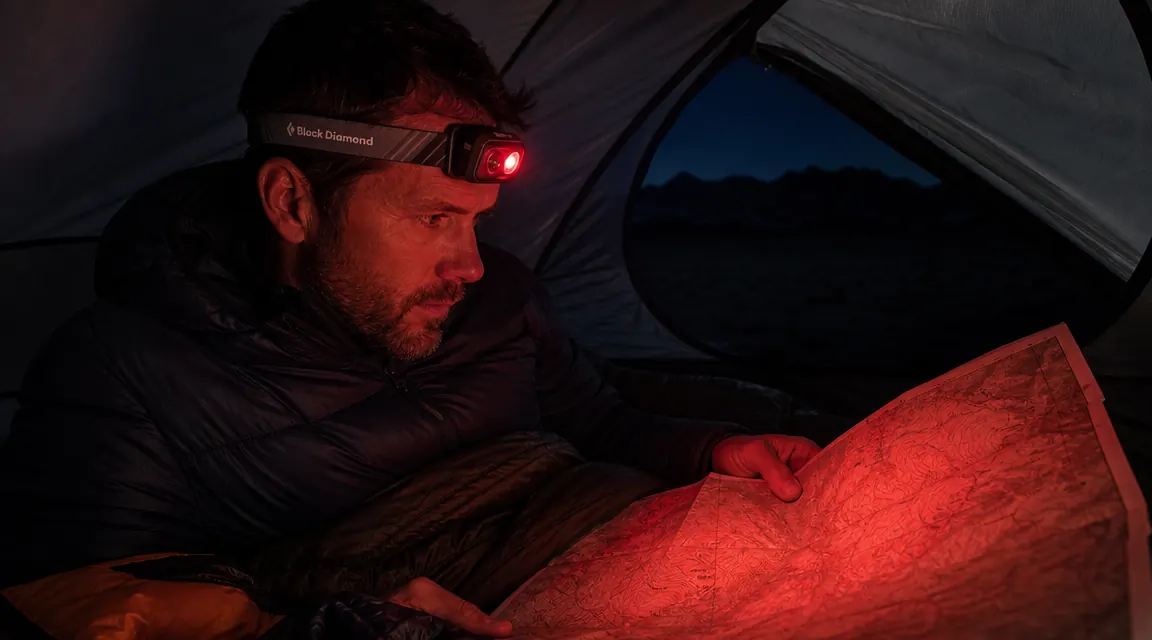
The red night-vision mode sits at 4 lumens and is triggered by holding the side button. I use it almost every trip during late-night bathroom runs when I do not want to blow out my night vision or wake up whoever I am camping with. It is not bright enough to hike by, but it covers camp perfectly and your eyes adjust in seconds when you switch back.
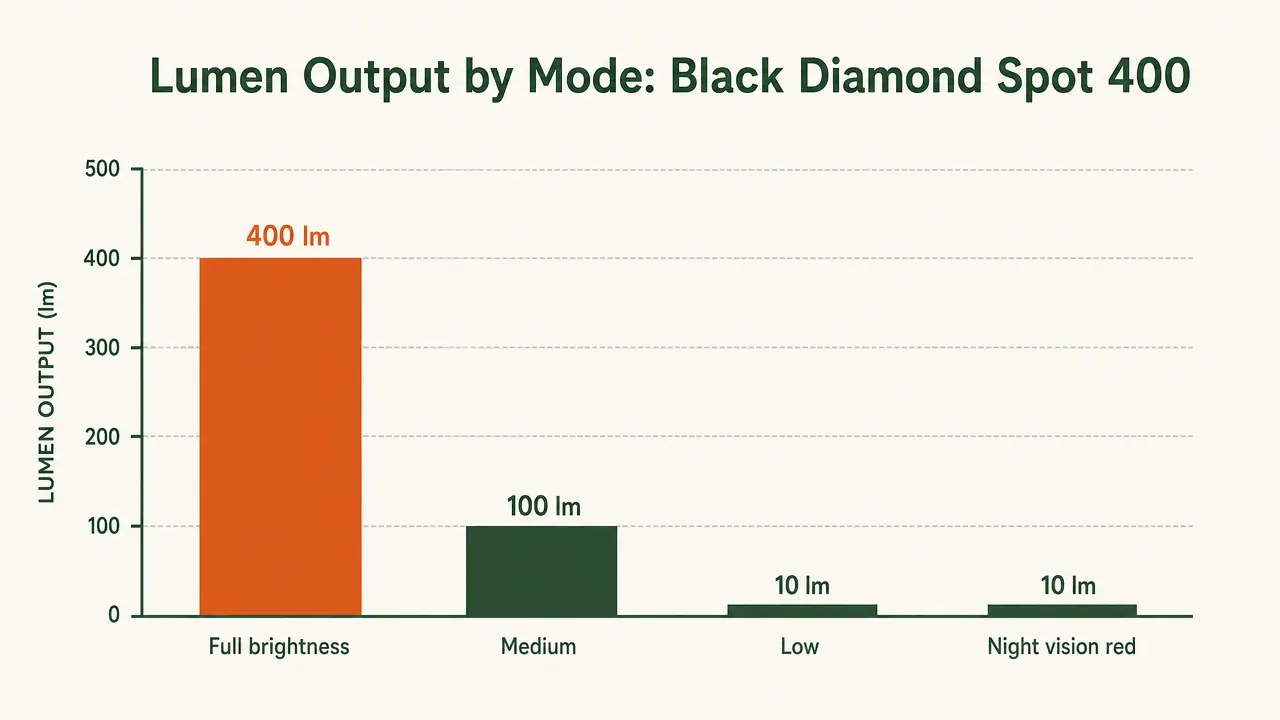
Battery Life and the Rechargeable Setup
This is the most practically important part of any headlamp review and the place where a lot of lights quietly fail you. Black Diamond rates the Spot 400 at 200 hours total burn time across all modes. That number is cumulative and combines low, medium, and high usage. In my experience, a full charge at the medium setting lasts well over a week of normal camping use, meaning one or two hours per night across multiple nights.
The USB-C charging is the feature I would not trade away. I charge the headlamp from the same cable I use for my phone. The indicator light on the back of the unit tells you charge status: red means low, yellow means charging, green means full. It is simple and it works. I have also confirmed that the fallback option works: when I forgot to charge before a solo trip, I swapped in three AAA batteries from my emergency kit and ran the headlamp that way for two nights without issue. Knowing I have a hard backup matters more than most people admit until they need it.
I forgot to charge it before one solo trip. Swapped in three AAA batteries and ran it for two full nights. That backup option matters more than most gear reviewers mention.
Waterproofing: The IPX8 Rating in Actual Rain
IPX8 is the highest waterproof rating short of industrial submersion specs. It means the light is rated to survive immersion in up to 1.1 meters of water for 30 minutes. For camping purposes, that translates to: this thing will survive a downpour, a creek crossing where your pack dips, and being left in a wet tent pocket overnight. I have tested the first two unintentionally and the third deliberately.
On the October Ohanapecosh trip I mentioned, it rained for most of Friday and Saturday. I wore the headlamp for probably four total hours in steady rain over those two days, including a 45-minute hike in the dark on a wet trail. The light never flicked, dimmed, or behaved oddly. When I got back to the trailhead, I wiped it down and it looked the same as when I packed it. The USB-C port cover was the one thing I kept an eye on, but the gasket held without any sign of moisture intrusion.

Lock Mode, Controls, and Everyday Livability
The Spot 400 has a lockout mode that prevents the light from switching on accidentally in your pack. You activate it by holding the power button until the light blinks three times. I use this every trip, every time I pack the headlamp away. I used to tape the button on cheaper lights to stop phantom activation from draining the battery mid-trip. Lockout mode solves that problem cleanly.
The controls are two buttons, front and rear. Front button cycles modes. Rear button is PowerTap for on-the-fly dimming. After a couple of outings it becomes muscle memory. The headband adjusts easily with one hand and the tilt mechanism on the light module is smooth and holds its angle even on rocky terrain. I have had cheaper headlamps where the tilt would creep downward over a long hike. The Spot 400 stays pointed where you aim it.
The unit weighs about 2.6 ounces with the rechargeable battery installed. That is lighter than most AA-powered headlamps in this brightness class. I wear it for extended periods during late camp setups without neck fatigue, which is more than I could say for some heavier lights I have tested.
Where It Falls Short
I want to be honest about what this light does not do well, because a review that has no cons is not a review. First, the price. At the higher end of the category, it costs more than several capable headlamps on Amazon. If you camp two weekends a year and mostly use a headlamp for walking to the bathroom, you probably do not need to spend this much. A budget light will serve that use case fine.
Second, the charging port cover is fiddly to open with cold hands or gloves. It is a small rubberized flap on the back of the unit and it requires a fingernail or a firm thumbnail to pop open. Not a dealbreaker, but on a 30-degree morning with liner gloves on, I found myself swearing at it once or twice.
Third, the full 400-lumen mode draws power fast. If you are running max brightness for extended hiking, battery life will be noticeably shorter than the spec sheet implies. In typical mixed use this is a non-issue, but if you plan to run full blast for hours of night hiking, pack a spare AAA set.
What I Liked
- Genuinely bright 400-lumen output holds up in real conditions, not just lab specs
- USB-C rechargeable with AAA battery fallback gives you two ways out
- IPX8 waterproofing survived sustained rain and wet conditions without issue
- Lockout mode prevents accidental activation and dead batteries mid-trip
- Lightweight at 2.6 oz, wearable for extended stretches without discomfort
- Red night-vision mode is easy to find in the dark and does not wreck your night vision
- Tilt mechanism holds its angle solidly on rugged terrain
Where It Falls Short
- Premium price is more than casual campers may need
- Charging port cover is awkward to open with cold hands or gloves
- Max brightness mode drains the battery faster than mixed-use specs suggest
- No strobe or SOS mode for emergencies
How It Compares: Spot 400 vs Budget Alternatives
I have used cheaper headlamps, including a budget Amazon basics light and a lower-priced Energizer Vision HD, for comparison reference. Both work. Neither lasts as long, handles rain as confidently, or gives you the same flexibility of modes and battery options. The gap between a budget headlamp and the Spot 400 is real, not imaginary. Whether that gap is worth the premium depends entirely on how serious you are about camping and how much you rely on your headlamp.
If you want a full head-to-head on specs and value, I put together a detailed comparison of the Spot 400 against the Petzl Tikkina on this site that covers lumens, beam distance, battery type, and waterproof ratings side by side. Worth reading before you decide. And if you are trying to figure out how to organize a late camp arrival so the headlamp gets real work, my guide on setting up camp after dark walks through a system that works even on short notice.
Who This Is For
The Spot 400 is built for backpackers and car campers who go out regularly and want one reliable light they never have to think about. If you camp more than four or five times a year, spend nights in wet weather, do any solo backcountry travel, or simply want a headlamp that will not die on you at the worst moment, this light earns its keep. The USB-C charging means it fits into the same routine as your phone and power bank. The AAA backup means you are never truly stuck. The IPX8 rating means rain is not a concern.
Who Should Skip It
If you camp once or twice a summer in a developed campground with hookups and lighting, spending this much on a headlamp is overkill. A budget option does the job. Similarly, if you are an ultralight backpacker counting every gram and willing to accept trade-offs, there are lighter options in the 1 to 1.5 oz range that sacrifice beam power and waterproofing to get there. The Spot 400 is not the lightest headlamp on the market. It is the right balance of weight, brightness, durability, and versatility for most campers who use their gear in the real world.
If you camp in rain, go out after dark, or just want a light you can rely on, the Spot 400 is hard to argue with.
It has been on every trip I have taken for a year. Black Diamond makes gear that lasts, and this headlamp is a prime example of that. Check current pricing below before it changes.
Amazon Check Today's Price on Amazon →